Regulation works when experts really do have the answer.
But the problem here is that we just don't know. We know about a few worrisome problems and signs, but we don't have a clear picture like we do with lead or asbestos.
We could switch from "allow by default" to "deny by default", but I'm not even sure that would help. Often problems are hard to find even once its widespread.
We also don't want to foster a "chemicals are bad" attitude more than it already exists.
I think the right answer is more funding for long-term rigorous studies. That way we know.
> We also don't want to foster a "chemicals are bad" attitude more than it already exists.
Why don't we want to foster this? If some compound is unknown, it seems prudent to assume its a risk until proven otherwise. Then you can calculate whether or not the possible miniscule or nonexistent benefit is worth the potentially miniscule or catastrophic downside.
Some might respond that this would hamper progress, but really it would just hamper sales. You can continue to learn things without testing on the general public. And if you can't, then maybe that's no excuse to test it in prod.
We actually do have an example of a category that is regulated as “deny by default” in the US but not elsewhere!
Sunscreen is regulated by the FDA unlike all other cosmetic products, and is considered a cosmetic in Korea, Japan, Canada and Asia. The end result is that there are a lot of new sunscreen formulations no one wants to put through the FDA process despite several attempts at simplification by the FDA and Congress; a new sunscreen chemical hasn’t been approved since the turn of the century.
The problem is that the already approved 15 or so chemicals either have side effects of their own, or have bad cosmetic properties (bad texture, bad mixing, leaves white color on skin, etc.). We may actually be exposing people to more risk from skin cancer due to the lack of products that people actually want to apply to their skin daily.
> Sunscreen is regulated by the FDA unlike all other cosmetic products
Sunscreen is not a cosmetic product, the intended effect of the product is not cosmetic. It makes perfect sense to regulate sunscreen as a drug. I'm really glad if they aren't letting people in the US lather up their faces with sunscreen lotions that can't demonstrate themselves to be "generally recognized as safe and effective". People are using sunscreen more than ever these days.
If the products were so good that everyone would buy them over our tired old sunscreen formulas, and if they don't poison people or the planet, then someone will take the time and pay the money to meet that standard and they will make back their investment very quickly as they put every other sunscreen company in the US out of business. If no one has done that yet and you are so confident in these new sunscreens why not take a shot yourself?
> the intended effect of the product is not cosmetic
I mean, what is the working definition of "cosmetic"? Toothpaste and moisturizer are considered cosmetic by the FDA even though they certainly have health applications.
> they will make back their investment very quickly
> Return on investment. The testing FDA requested is extensive, would cost millions of dollars, or take several years to conduct, according to sponsor representatives. Some stakeholders and sponsor representatives said that sponsors are currently working to develop newer sunscreen ingredients and are therefore reluctant to invest in the testing FDA requested for the older ingredients covered by the pending applications.
So it's unclear that this process is worth it when the foreign cosmetics companies can just sell to the other 7.6B people not covered by these requirements, and the products might no longer be manufactured by the time they are approved for use in the US. Also, no ingredient has successfully made it through in the past 22 years, so it's not clear that spending all that money will actually result in actually being able to sell the ingredient.
In addition, according to the same GAO report, the FDA requires animal testing. It is a really big movement right now in consumer cosmetics that the consumers who are paying for premium products also want cruelty-free products, so the required FDA testing may actually make the products unmarketable.
> if they don't poison people or the planet
To be clear, the approved ingredients don't necessarily do this either. Only two ingredients of the approved 16 are deemed to be GRASE (generally recognized as safe & effective) by the FDA. Two are just not safe, and the remaining 12 do not have enough data. https://www.fda.gov/drugs/understanding-over-counter-medicin...
I get the avoision factor, but what do we have to go on to know the safety of the other country’s products if they’re more loosely regulated?
It’s not like the FDA requires studies to be done in USA, so it’s hard(er) to argue that this is a case of regulatory capture.
It sounds like the evidence base for the non-FDA products isn’t there beyond “people in blank have used it and we can confirm they didn’t immediately die but otherwise we don’t really know”.
Meanwhile, I can’t just import a European car and register it, even though it has met almost entirely overlapping safety standards.
The difference is that we certainly have approved new car safety features in the US in the last 22 years, not all of which were domestic in origin. How many regulatory categories can we speak of that have not allowed any new entries in that time frame?
In that time frame some of these ingredients like bemotrizinol have been available to hundreds of millions of people. If there was a risk of something like thalidomide babies here, it would’ve been observable by now.
"Chemicals" is far too ill- defined a term. Even if you define it as a substance that doesn't occur in significant amounts in nature (therefore our bodies have had no chance to adapt to) arguably most chemicals produced (esp. medications) have benefits that easily make the risks/downsides worth it, particularly as there are usually ways of mitigating those risks (which we absolutely need to do more of).
It'd be great if we could use ML and super sophisticated simulators to determine ahead of time whether a particular chemical might have unexpected negative side effects were they to reach a certain level of saturation in our environment, and once such technology is available I'd be fully in support of it being mandatory.
Does it fully degrade in soil and/or seawater in a reasonable time. If it does not, are the components that remain high-molecular-weight polymers or are they small molecules?
What happens to it in a mammal body? Does it accumulate or is it excreted or otherwise eliminated?
Does it contain harmful elements (which inherently cannot degrade)?
Does aging or UV exposure change the answer to #1?
Does it contain contaminants that are problematic as above?
By these standards, PFOA would massively fail. PTFE might pass by itself but might fail the contaminant test. Historical industrial discharges from fluorochemical plants would fail.
If those tests can be done within a reasonable timeframe and cost then sure, they should be mandatory. But there's still a question of whether the benefits outweigh any downsides.
There's been a number of hypotheses floating about that many of the industrial chemicals permeating our environment might be partly responsible for declining fertility - if true, how do you judge whether that's necessarily a bad thing in a world where we're already overstretching our planet's ability to sustain our lifestyles?
You’re scope creeping unnecessarily - even if we’re beyond carrying capacity for the planet the answer is not let ‘er rip with industrial chemicals. Better to address the issues separately, so you can make sure there are fewer unintended consequences. Also, if industrial chemicals are causing declining birth rates in humans don’t you think they’re doing that to other animals too? And that may be contributing to making the whole planet less livable?
Absolutely, but the research to determine these things is slow and expensive. We still don't have a clear picture around fertility after decades of study, and that's just one example. Banning things until we have conclusive evidence they're 100% safe isn't feasible, that's my only point.
And just to be clear I'm not the least bit in the laissez-faire camp of "allow anything and let the market decide what's safe" either. Regulation is critical, but it has limits and we (as in taxpayer-funded research facilities etc.) should be regularly reexamining whether the benefits outweigh the downsides for all industrially produced chemical substances.
I'd agree on such a ban.
But how expensive is it to determine that a small molecule is bio accumulating?
And how much time/money do we need to spend on testing?
It's not the pure economic harm I'm worried about. Such a molecule might well be a key part of a genuine solution to reducing GHG emissions.
Overpopulation is a larger problem than most people seem to realize because they aren't usually thinking about anything more than how many bodies can be crammed into a given area. Once you start thinking about how many people a given area can sustainably support all the space we seem to have matters a lot less. I'm all for working to address overpopulation, but clearly there's a huge problem with choosing to murder or poison massive numbers of other people to "help".
When populations reach the point where they start genuinely thinking being dead or never being born is better than contributing to the problem they stop having kids, and start looking at suicide. Maybe you're at that point already, and if you made the choice to die in order to help, or by way of example, I wouldn't fault you for it, but your feelings on the matter should never become someone else's problem and it should never justify the actions of someone causing, or allowing someone to cause, large numbers of people to suffer.
Not sure how you got any of that from my message.
I'm not even suggesting we should keep using particular chemicals even if they're known to be linked to infertility, only that if said chemicals have a particular benefit, maybe the disadvantage of slightly decreased fertility is worthwhile (as it is that link hasn't been firmly established even after decades of research).
People don't need to decide if the "disadvantage" of being unknowingly poisoned until fertility is impaired is "worth it". Anyone who feels that they are too fertile can have themselves sterilized without the harm to the environment caused by these chemicals and anybody who hasn't made that choice for themselves should never have to worry about being poisoned either. That means nobody should get to decide it's worth it for them to keep using the chemicals if that means everyone else gets poisoned against their will. There's really no big moral dilemma here.
> arguably most chemicals produced (esp. medications) have benefits that easily make the risks/downsides worth it
Without some heavy qualification, this seems unlikely to be true.
Maybe if you restrict it to things that have successfully gone through some sort of heavy trials, but even then there are plenty of things that get through with a tiny upside (like the recent alzheimers drug that made headlines). And most things don't make it through trials.
If you open it up to any concoction that humans have discovered or whipped up in a lab, hoo boy.
Edit: my running definition here would be any kind of compound that we've isolated and attempted to sell.
1. Have profound misunderstanding of what is a "chemical"
2. have profound Ignorance of how very very few things in life are "provably knowingly completely safe"
It's not that we would "eliminate a few bad chemicals" with that approach, it's that we would eliminate virtually everything. And let's not start with "let's use natural stuff" and get into silly argument as to how do you define it and how do you prove it safe (as people are also profoundly ignorant on what is "natural" or how provably safe it is).
Everything will kill you. You will die. Note that I am not advocating nihilistic approach of "anything goes" / rampant markets / zero oversight, but I'm also not advocating nihilistic approach of "nothing goes". Human body and interactions are mind numbingly complex and I don't know how you demonstrate, conclusively, anything without testing in prod or even then, for given value of "conclusively". I doubt we would leave apples for sale if we tried to decompose them and prove all compounds within it conclusively safe.
The things that have been around for generations and we haven't yet discovered deal breaking issues in should obviously get a pass (unless something is eventually found of course).
When a company comes out with a flashy new product that has a novel use of a compound, we should be skeptical by default, especially if it is something that eventually makes its way onto or into our bodies somehow.
I'm not asking for complete safety. I'm just suggesting that we don't presume "safe enough" by default.
Apples are fine. When you do some novel shit to that apple before it gets to me, no thanks, I'll wait and see. Whatever the benefit is, its probably not for my sake (it's probably good for margins though), and if it is it's probably not that much better than a plain old apple.
The problem is that (a) you can't prove something safe, you can merely fail to find harm; and (b) literally everything is a chemical, often it already exists in some form and is used for some purposes, and we reuse it for something else at a larger scale... at large enough scales basically anything is dangerous.
If they occur in nature, esp. in food, our bodies have had time to adapt to them, so that's a distraction. But even restricted to "man-made chemicals" (that can get into our bloodstream and interact with our cellular biology) it's still an enormous class of substances that it's silly to treat as dangerous-until- proven-otherwise - our scientific understanding is a little more advanced than that.
That's not a distraction at all. There are plenty of naturally-occuring chemicals in plants that are deadly poisons to humans. Some of them are even naturally present at low levels in food we eat, such as cyanide in some fruits.
And yes, if manufacturers were creating unnatural quantities of those and polluting the environment with them in a way our bodies couldn't handle, they'd need to be regulated too (some probably are). But the chemicals that naturally occur in food we've been eating for 10s or 100s of 1000s of years aren't the issue here.
This is probably not a great reading of what you wrote, so I'm happy to be corrected, but this is what I get from your comment: humanity has discovered or invented beneficial uses for some compounds (like for example some of the vaccines that have been developed throughout history), so therefore we should presume the safety of every other novel use of a compound that comes along.
There are lots of things that can be detected rather simply in a lab though. Like running a bioassay to ascertain activity at various receptors. Bisphenol A for instance has interactions with several hormone receptors. A single in vitro study is enough to label BPA as biologically active and therefore a potential risk.
Similarly, some PFAS compounds are now known to interact with certain receptors involved in lipid metabolism. So it can also be determined as biologically active in vitro.
There's just so much more that can be done about this on the regulatory side than is done currently.
There's a middle ground. You can permit novel substances but if it is discovered to be harmful then the burden of proof is inverted for the family of related chemicals. Like not only narcotics but also chemical analogues (even those that haven't been designed yet) are banned
And BPF, both of which are now known to have similar problems.
It's not like the companies developing these chemicals don't know that they're likely to have the same activity. It's just pharmacology. Similar structures tend to have similar activity.
I definitely second GPs suggestion of having the burden of proof reversed like that. It would greatly reduce the work required by researchers, too.
Interestingly, BPA was actually known to have estrogenergic properties in the 30s shortly after it was first isolated, and was first researched as a potential estrogen replacement. With the right regulation this could have been caught close to a century ago...
The fact that we are commenting in a thread about a report on something that has an implied "this is bad for people" suggests experts know, to a good enough degree, about certain things that should be regulated better.
It implies that some people think it's bad, but not necessarily that they're right. It's not like every science article shared here is accurate or reflects scientific consensus.
There's no heuristic shortcut for actually learning about the subject. Without doing the homework, all we can say is that it seems plausible that there might be a problem.
Given that these compounds are mass produced and spread all over the globe at an industrial scale, I think the plausibility of a problem should be sufficient for holding back. Especially when the compound is known to be non-degradable. Then we know, if there is a problem, we're gonna be stuck with it for a long time. Even more reason for extreme caution.
It's reason for concern but not enough to make a convincing case. This is still trying to take a logical shortcut to avoid actually learning specifics about the problem.
But if you don't learn anything then you're just another person saying their opinion on the Internet, like the rest of us.
My point is, I don't like this defeatist attitude of "well there's no way to know, so we should just do more of the same". Just because it's a very hard problem doesn't mean there isn't a lot more we could do. And a lot of the chemicals causing problems today could have been ruled out with far less effort than haphazardly testing it on the whole world population.
I don't see why so many people these days need to reduce everything to this type of false dichotomy.
And it's also a question of how much concern is enough? I would argue that currently the threshold is set far, far too high.
Right. I'm a pretty bad example because I obsessively investigate further. I can't help it. I see something, I need to understand it. It's my curse in life.
“Oh it’ll probably be fine” is just not good enough any more. We’ve destroyed and irreparably harmed huge swaths of nature in a vanishingly short period of time due to this attitude. It has failed again, and again, and again. If we keep this up, we really will destroy ourselves and the habitability of the planet. The consequences are just so dire now that the notion that we should just roll the dice is frankly absurd. If we don’t know it’s safe, assume it’s not. Perfect? No. Better than the alternative? Yes.
Cognitive dissonance regarding this is completely crazy right now. As far as I can tell, most people will acknowledge that there is a big crisis looming ahead by now (some even that we're already in the midst of it) but the mere thought of the tiniest bit of action to deal with that crisis is met with steadfast resistance, even things that don't affect them all that much individually. You'd expect a lot of popular demand for political action to at least soften the crash, but at least where I live (southern Germany) I don't perceive any such demand. What concerns are voiced are always strictly in the abstract. Please do save the environment, but definitely not in my backyard, or village, or district, or anywhere else, thank you very much.
Yet the changes are really obvious by now. I've been on a hike in the northern Alps a few days ago. I know the mountain quite well, and it should be teeming with life this time of the year, insects, birds, but it was eerily quiet across the whole altitude range. The river in my hometown should carry yearly floodwaters from snowmelt, but this year there was not a hint of a flood. The all-time temperature record was shattered (again), though. Forest fires in areas that never saw any just decades ago. Clean windshields in mid-August. Either no rainfall for months, or several 1000-year floods, nothing in between. Silence where there have been annoyingly loud crickets and frogs since forever.
I guess we're running a deeply, deeply dangerous experiment on the biosphere and I'm not convinced anymore that it's going to be fine. I have a feeling it's going to be very, very much not fine at all.
You're right we're not completely certain, but I think it would be prudent to immediately cut back on all PFAS except scenarios where no viable alternative exists since they are so hard to remove from the environment. As nice as non-stick PFAS pans are, they need to go for now until we know more.
> It’s very difficult (if not impossible) to prove chemicals are safe.
Yes, but it's certainly possible to rule out entire classes of harms by asking the right questions before putting a product on the market. Maybe 100% safe is impossible but 99% is still a pretty low bar/standard when it comes to health/pollution risks.
The problem is in the current situation, corporations push toxic products on everyone that they either know to be toxic or really don't want to find out. Then we wait for people to get sick and die, then finally after it becomes a too big scandal for corporate PR and government regulators to pretend they didn't see, they start to maybe study the problem and issue guidelines.
This timeline is so broken and we see the same thing in the medical world where substances we'd known to be harmful for years/decades kept on being marketed and prescribed to unknowing patients. I personally have no faith in governments (who created or benefited from these abuses), but if you're a believer in regulations, the bare minimum they can do is publish 100% of toxicity claims/studies without any delay from submission (public inbox).
This could help in that whistleblowers are often coming forward with such claims (such as the EDF nuclear whistleblower lately) but it's hard for them to find a platform, and for the public to get informed.
One aspect we have, is defense materials being mass-produced for potentially large-scale warfare, then really raking in the bucks when a consumer application can be found. That way everybody wants some, not just soldiers. And if it's consumable, so much better since that calls for continuous mass-production. And where's it all going to end up? What part of the environment? Well, that's diferent for different materials.
Sometimes a material itself is highly disruptive, other times it's the vast quantities that end up being mass-produced.
Even then the risk of an unforseen toxic outcome has always been underestimated.
Since it will be practically impossible to remove PFAs from the planet's surface and atmosphere short of hoping it will all eventually wash out and gets buried in sediments (but will it, ever?), when so much is at stake at our very existential foundations, I believe we should forego the immediate wide-scale application of novel compounds unless they have plausibly be shown to be safe. Yes, that can prove to be very difficult but somehow I feel having one less formula for making anti-stick pans or, historically, having to use a slightly more expensive antiknock agent are small prices to pay if it keeps the air and the water free from chemicals that cause troubles for decades if not centuries for uncounted numbers of people and animals.
There's always some risk left no matter the rigor of testing. Shouldn't keep us from doing our best.
Sure, but if your chemical can enter the hydrosphere and never break down, we should maybe study it for a long long long time before applying it to everything.
And yet it's potentially very easy to prove something is unsafe, or likely to have unforeseen effects. In vitro bioassays, animal testing. Lots of the chemicals causing problems today could have fairly easily been screened out this way. Just because epistemologically it's impossible to ever know for sure something is safe, that's not a justification for going ahead with almost no testing at all.
Nothing in science can be "proven". Proof only exists in mathematics and logic. You can't prove something is safe, but you can provide evidence that it is unsafe. And generally the best evidence for something being unsafe is unfortunately only available after something is in widespread use because then the links to cancer, birth defects, or whatever can be found. There are lesser forms of evidence based on testing on animals and cell lines than can be done before the widespread use, but these have a lot of both false positives and false negatives.
Exactly! The burden of proof to prove that something is harmful somehow landed on the public, which allowed harmful things to continue to be in use for years (decades!) while things were litigated and all manner of disinformation was pushed out by industry. This should never have been allowed to be the case.
Slightly off topic: The recent movie starring Mark Ruffalo, Dark Water, is excellent. It covers PFAS and one lawyer’s fight to bring it to light. Very similar to the excellent “A Civil Action” starring John Travolta in the 90s or early 2000s (obligatory: the book is far better than the movie).
If I could make one change I would require more thorough scrutiny for any product that we know is going to persist in the environment for a long time. The half life of your new plastic is 10 years due to UV degradation? Great you can use that only moderate safety studies. The half life of your new waterproof coating is 100 years? Let's do some pretty serious studies. Half life of this gasoline additive is basically forever? Um, maybe don't use that.
> Regulation works when experts really do have the answer.
I think there are other significant factors to consider as well.
In the US at least I think regulation, in our current day, has failed in many areas due to 1) the slowing down of decision makers to become informed and make decisions (see congress for stagnation in passing legal regulations) 2) industries or large industry players have waged effective influence campaigns in mainstream and scientific communities to push a friendly agenda or inject uncertainty which has nock on affects when it comes to funding (see pesticides like neonics and glyphosates, oil and gas companies with respect to global warming and plastic recycling, tobaco companies and smoking causing cancer, …), and 3) a certain degree of capture in regulatory agencies by industry (industry players later work for the regulatory agency or the reverse, as well as other tactics). 4) the politicization of regulation (not sure how much this can be helped though).
It’s a mess.
> We could switch from "allow by default" to "deny by default", but I'm not even sure that would help.
There may be a middle ground here. As a chemic becomes more widely used that could trigger required enhanced testing by a regulatory agency as well as research grants looking into their safety.
And as a chemical becomes ever more widely used rigorous long-term studies could be required.
I’m not sure what the right long term answer is but I can’t help but think there is some fundamental mismatch of top down regulation by regulatory bodies in a market based system where companies are innovating and also creating these harms / negative externalities.
In the former regulators are slow, reactionary, and often substantial harm must have already occurred for a regulation to be passed. The latter is a dynamic and fast moving system where companies are ruled by a fitness function which is often myopic and locally greedy.
It seems introducing another market for regulation could offer a solution by using one dynamic system to regulate another. Carbon credits is an example of this. However two or more interacting systems will make things much harder to reason about and may have their own significant flaws if not designed well (for example trees are planted but then die earlier than expected or are later harvested after the carbon credits have been sold).
While emerging evidence should be used to change guidelines, we should not be at the mercy of corporations wishing to increase their profit margins with unknown chemicals.
You don't have to work with what you have only just invented and don't understand.
You're talking about bottles and pans. We have managed with bottles and pans for a thousand years before pfas.
What? I'm saying we now know it's super harmful and should work with that knowledge to regulate against it, without waiting for all experts to agree and all studies to show.
> But the problem here is that we just don't know.
Many of these things we don't know are because it would be unethical to do the experiment to give some people PFAS and some people no PFAS and see if the PFAS group get more diseases.
Instead, we allow PFAS to be used indiscriminately, and then afterwards regret it.
Experimentation of potentially harmful things on people should be allowed if the alternative is giving the same potentially harmful thing to everybody with no experimentation done.
The fireproofing chemical sprayed on fabrics for sheets upholstery etc since the 1970s in the US is and has been a known forever chemical but also very profitable so the mfr basically used the tobacco industry strategy for 20+ years at which point its in everyone's bodies for the rest of their lives. [1]
The book was published over a decade ago, so news travels slowly sometimes, even to regulators.
People, people. Why do you all expect regulation to work in the presence of corruption?
All regulations break down with high enough stakes. We are in this mess right now, because we made the mistake of thinking that regulations will be good enough to stop it.


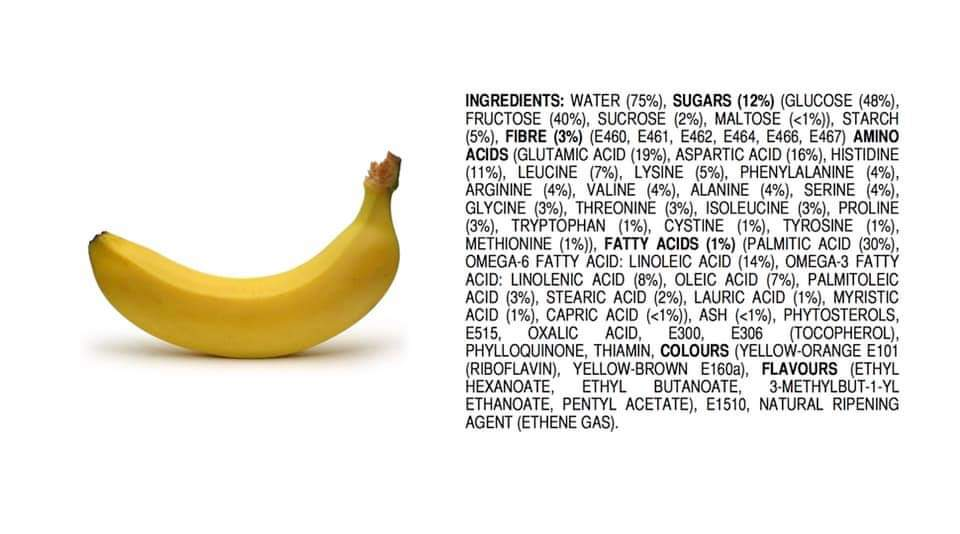
Trying to keep track of what is safe and isn't is basically impossible for an individual.
I tried for years to avoid PFAS and friends, only to discover my sofa was covered in it.
What's the point.