It wasn't perfect nor did it hit sRGB, but still pretty darn good for photos. As you say, they didn't color manage but they did a great job factory calibrating and selecting panels, and thus the lack of color management wasn't really an issue in practice, at least when designing apps. About 2 years after Instagram launched, the iPhone 5 came out which had sRGB.
The point still stands that the displays weren't the reason insta photos were filtered - it was driven by camera limitations and the culture / artistic sensibilities that Instagram imbued in the product.
That said, even when iOS didn’t do active color management (for performance reasons), there were some attempts to simulate it:
> Your content is matched to the sRGB color space on the authoring platform. This matching is not performed dynamically on the iOS device. Instead, it happens during authoring on your Mac OS X desktop.
[..]
> Targeted color management may also occur when you sync content to your mobile device. In fact, iTunes running on the desktop provides color management to the iOS targeted color space when you sync content from iPhoto to your iOS device.
(As you noted, there have also been more recent developments. Since last year there have been iOS devices which support the DCI-P3 gamut and use active color management; some of those devices also support “True Tone”, which adjusts the color mapping based on ambient light.)


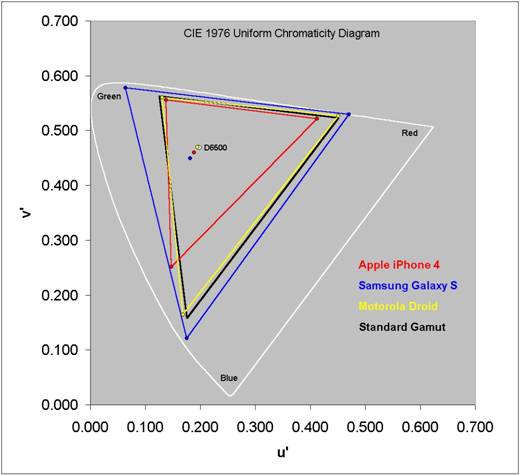
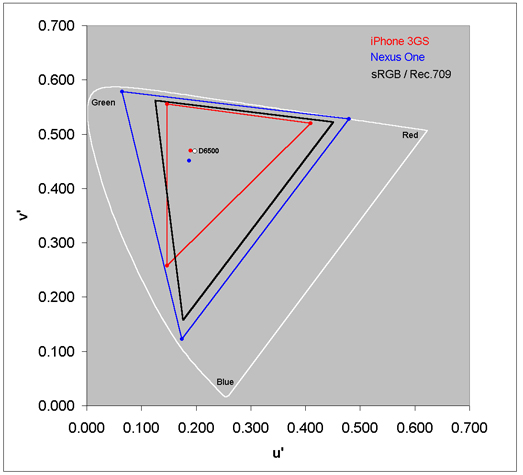
It wasn't perfect nor did it hit sRGB, but still pretty darn good for photos. As you say, they didn't color manage but they did a great job factory calibrating and selecting panels, and thus the lack of color management wasn't really an issue in practice, at least when designing apps. About 2 years after Instagram launched, the iPhone 5 came out which had sRGB.
The point still stands that the displays weren't the reason insta photos were filtered - it was driven by camera limitations and the culture / artistic sensibilities that Instagram imbued in the product.